

Pragmata: Why This Sci-Fi Rollercoaster is the Real Deal (Gamer Review)

After years of mystery, delays, and cryptic trailers, Capcom’s Pragmata has finally arrived—and spoiler alert: it was entirely worth the wait. Capcom took a massive swing with this one, and the result is a phenomenal sci-fi/horror-lite masterpiece that satisfies every need for technical polish, intense combat, and emotional heart. Let’s begin the Pragmata review from my time on the Lunar Research Station.
The Hook: Instantly Drawn In
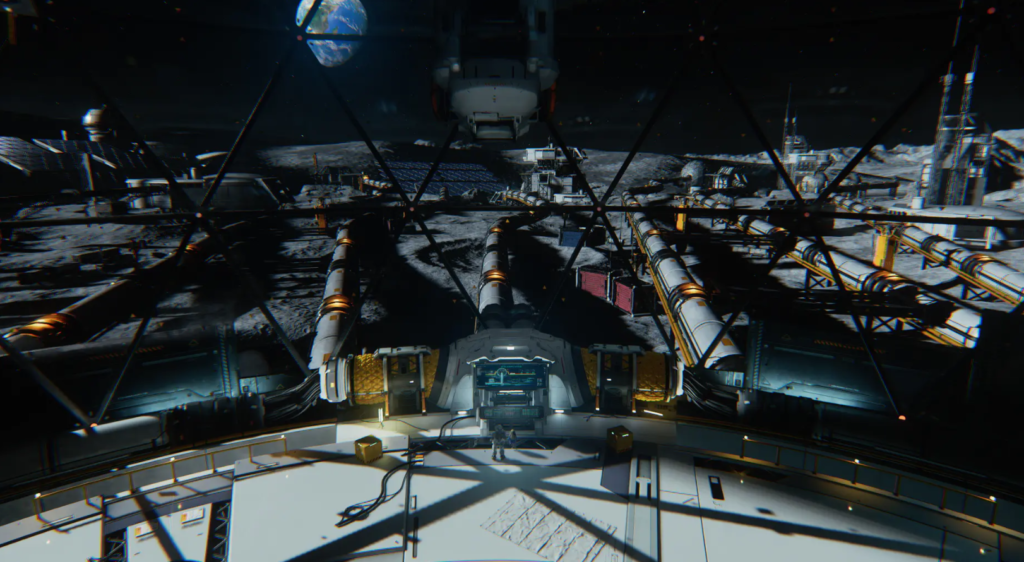
Let me tell you, the second the research vessel Eurotis hit the lunar base’s airspace, I knew the mission had massive death flags written all over it. With pure radio silence from “The Cradle” facility and the AI, Edis, completely ghosting us, a manual landing was our only option. Seeing those massive 3D-printed Lunafilament structures for the first time was wild, but the RE Engine optimization truly shines when everything goes to hell.
One second I’m admiring the view, and the next, a massive moonquake triggers a total structural collapse. As our protagonist, Hugh Williams, I got absolutely wrecked in the rubble. Waking up dazed, my suit actively being dissolved by “Dead Filament”—the toxic, corrosive byproduct of the base’s refining process—rogue Walker bots closed in for the kill. That’s when Diana appears. This mysterious little girl didn’t just “help”; she used high-tier tech to patch my suit and literally brought me back from a Game Over screen. From that moment, you aren’t just playing some skeptical engineer; you’re a protector in a world trying to end you in the most creative ways possible.
Sci-Fi Tension & Environmental Horror
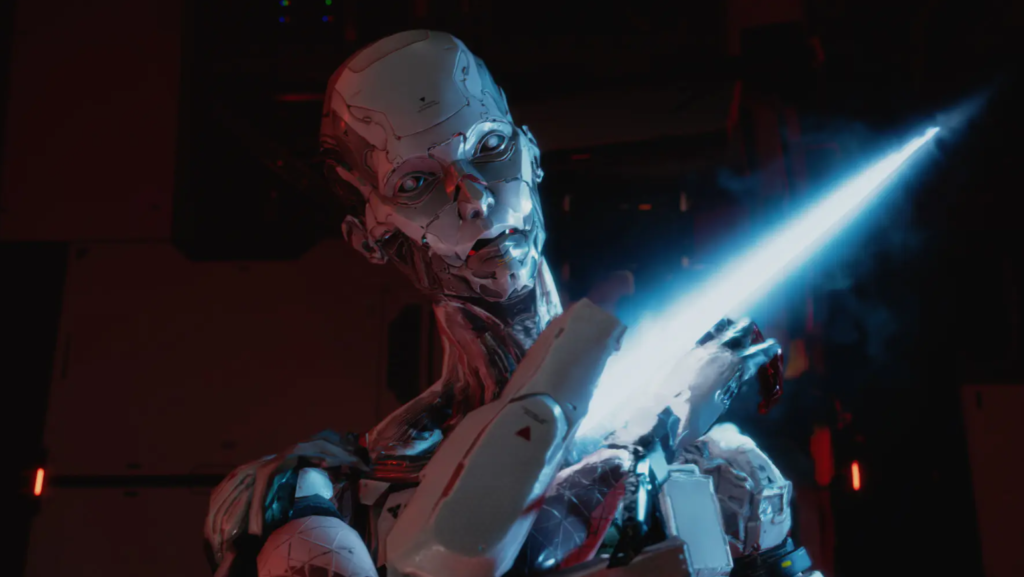
Pragmata isn’t trying to be a pure horror title, but the atmosphere is heavy with “digital uncanny valley” vibes. Capcom’s devs actually hand-crafted the glitches in the NYC sub-level—like taxis sinking into solid asphalt and concrete pillars clipping through buses—rather than relying on procedural RNG. It makes the “wrongness” feel totally intentional and cursed.
The tension peaks in the Sector 3 Terra Dome, where unregulated plant growth and spore clusters create sightline blocks, turning a simple walk into an ambush gauntlet. Between Corrupted Walker Bots, the relentless SectorGuard treating you like an unregistered guest marked for termination, and the ever-present threat of organic-dissolving Dead Filament, the game keeps you constantly on your toes.
Hacking Meets Shooting: The Dual-Tasking Rush
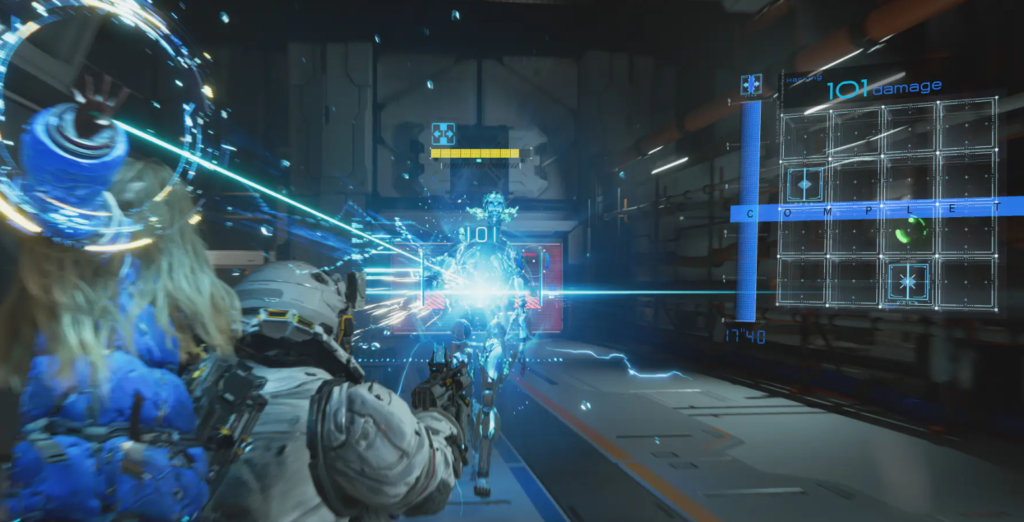
If you’re bored of the typical “point and click” shooter, Pragmata’s combat loop is your new addiction. The game runs on a “Dual-Tasking” paradigm. You can’t just spray and pray; these bots have high-density metal plating that will reflect bullets right back at your own hitboxes.
While managing Hugh’s thermal buildup (overheating triggers a brutal reload penalty), you use the right stick to navigate Diana’s real-time maze interface. You trace paths through blue nodes to strip enemy armor, but the hardcore move is hitting the optional nodes to scale your damage multipliers and trigger a “Temporal Stagger,” letting you achieve a total flow state where you just dismantle bosses.
Combat Roles: The Tactical Breakdown
| Mechanic | What Hugh Does | What Diana Does |
| Primary Action | Primary Fire: Delivers DPS to exposed cores and weak points. | Grid Hacking: Real-time maze navigation to strip metal armor. |
| Management | Heat Management: Prevents thermal buildup to avoid reload locks. | Temporal Stagger: Traces specific nodes to slow enemies in time. |
| Utility | Vertical Traversal: Uses thrusters for low-gravity dashes and dodges. | Resource Buffing: Hacks drops to provide extra Lunafilament/ammo. |
| Heavy Impact | Heavy Weapons: Deploys Jackhammers and Homing Missiles. | Mass Confusion: Hacks bot signals to cause friendly fire. |
The Ultimate “Dad Game” Core
The true heart of Pragmata is the found-family bond between Hugh and Diana. Hugh starts as a skeptical loner—an orphan who only found “family” when his teammates James, Ken, and Nick listened to him. Carrying the survivor’s guilt of their deaths, his transition into a father figure feels incredibly earned.
Diana isn’t some annoying escort NPC. She’s Serial Number D-I-0336-7, a Pragmata unit labeled a “failure” by Dr. Higgins because her body purged Dead Filament instead of storing it. That very “flaw” is what makes her human. The Shelter downtime is where this connection hits home. Playing hide-and-seek, watching her draw pictures of the holographic cats she chases, and sharing “Earth Memories” about the ocean and camping gives the mission massive stakes. You don’t protect her because the objective marker tells you to; you do it because she’s all you’ve got left.
A Tale of Two Endings (Spoilers Ahead)
Pragmata doesn’t hold back when it wraps up. The standard ending is a masterclass in emotional storytelling, delivering a bittersweet, tragic conclusion that stays with you.
But here is the pro-tip for the completionists: once you roll credits, the real game begins. You need to dive into the “Unknown Signal” post-game mode. Meet “Big Cabin” in the Hidden Chamber to unlock the 10 Secret Missions. Completing these isn’t just for a flex; it’s the only way to unlock the Black Box Mod. If you re-run the final encounter with that mod equipped, it suppresses Hugh’s Dead Filament infection, unlocking the Secret Ending where he actually survives. It completely flips a tragic one-shot into a legendary foundation for a sequel.
The Omega Verdict
Pragmata touches every itch for a great sci-fi/horror-lite game. It delivers punishing but fair difficulty, a brilliant dual-tasking combat system, and a central relationship that genuinely makes you care. Capcom has struck gold.
FINAL VERDICT: 9/10 – A MUST-PLAY MASTERPIECE. DON’T SLEEP ON THE BLACK BOX MOD.
Did you play Pragmata? How did you feel about it! Let us know on your News Feed!




Responses