Nvidia’s DLSS Dilemma

What DLSS 5 Is Trying to Do
Essentially DLSS 5 builds on the foundation already established with its previous iterations by using AI models to upscale lower-resolution images into higher-resolution outputs. With the difference this time being the prevalence and overall scale of its usage.
According to Nvidia the technology leans even harder into frame generation and predictive rendering, while simultaneously aiming to:
• Increase frame rates beyond native rendering limits
• Reduce GPU workload in demanding scenes
• Enhance ray tracing performance without heavy hardware strain
In theory, this should allow mid-range hardware to deliver high-end visual experiences which is a concept that has always been Nvidia’s long term goal with regard to DLSS in general.
Where the Controversy Begins
The overall pushback surrounding this isn’t about the performance itself, it is about how said performance is being achieved.
Critics of DLSS 5 argue that the over reliance on aggressive frame generation introduces a growing disconnect between what’s rendered and what’s actually “real” in the frame pipeline. An issue of which has sparked concerns around:
• Input latency: Generated frames may look smooth but can feel less responsive
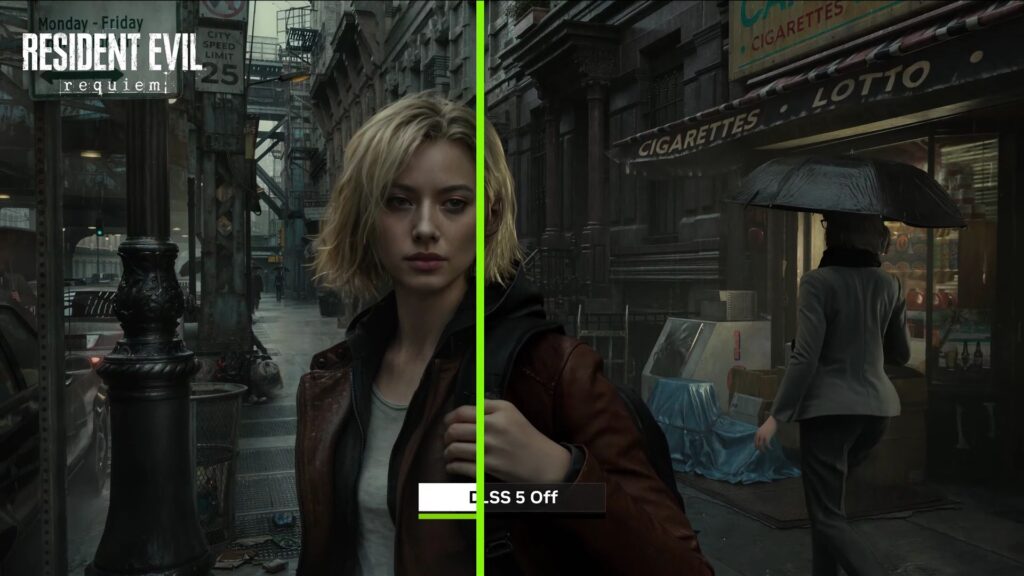
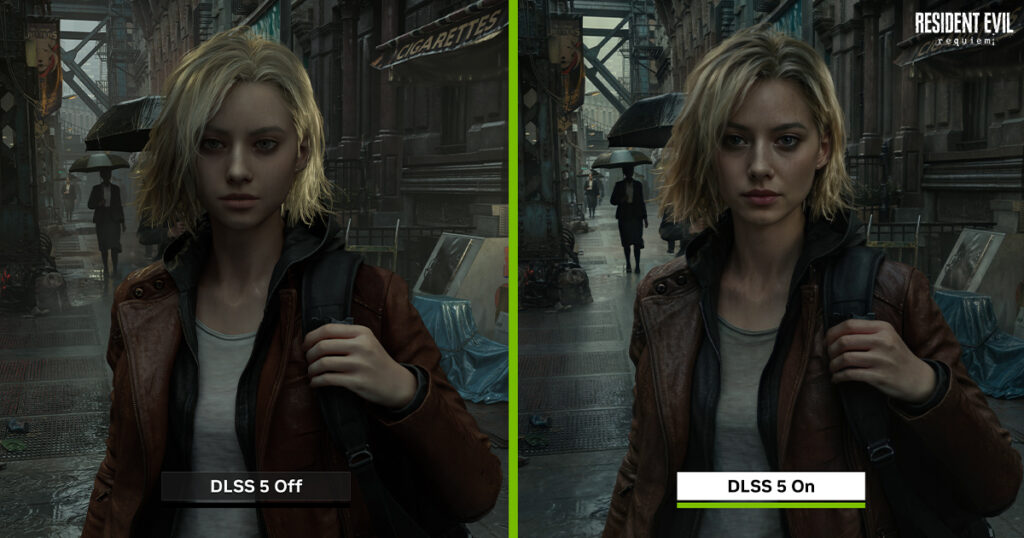
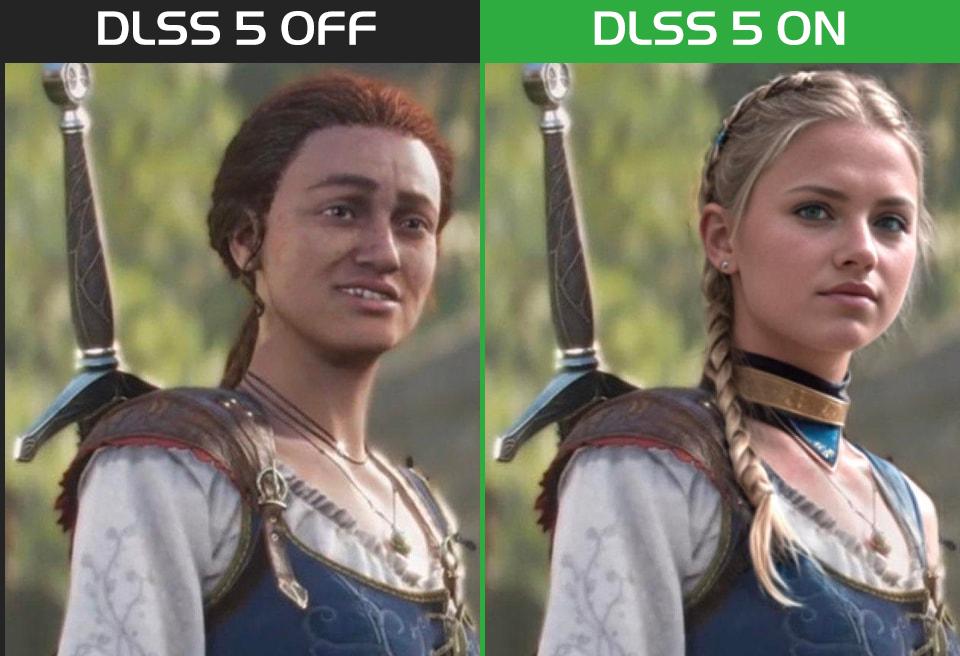
• Visual accuracy: AI reconstruction can introduce artifacts or inconsistencies
• Competitive integrity: In fast-paced games, synthetic frames could impact fairness
With PC gamers also raising a fundamental question…
If a large portion of what you’re seeing isn’t directly rendered, does it still count as true performance?

Developers Are Split
Game developers appear divided on DLSS 5’s implementation.
On one side, studios see it as a powerful tool, especially for pushing high-fidelity visuals like ray tracing without sacrificing performance. On the other hand, some developers are cautious about over-reliance on AI-driven rendering pipelines.
This divide reflects a broader industry tension:
• Those who are Pro-DLSS 5: Say that it enables bigger, more detailed worlds
• While those who are Skeptical: Say it risks masking optimization issues behind AI shortcuts
For developers already balancing performance budgets, DLSS 5 introduces both opportunity and risk.

The Player Perspective
Among players, the reaction has been just as mixed.
Some are impressed by the sheer smoothness DLSS 5 can deliver, especially on hardware that would otherwise struggle, while others feel that the technology prioritizes numbers over authenticity, boosting FPS counters while subtly degrading the “feel” of gameplay.
Whether or not it is the choice for you comes down to your own priorities:
• Do you value higher frame rates at any cost?
• Or do you prefer native rendering and consistent responsiveness?
There isn’t a universal answer, which is exactly why the controversy has gained so much traction.
A Turning Point for Graphics Technology
DLSS 5 may represent more than just another upgrade it could signal a shift in how games are rendered moving forward.
If AI-generated frames become the norm, the industry may move further away from traditional rendering benchmarks and toward hybrid pipelines where machine learning plays a central role.
That evolution brings clear advantages but also forces a rethink of what performance, fidelity, and responsiveness actually mean in the context of modern gaming.
The Bottom Line
The shift with DLSS 5 isn’t simply a technical update, it’s a philosophical one.
It challenges long standing assumptions about rendering, performance, and what players expect from their hardware. Whether it ultimately becomes the new standard or a divisive experiment will depend on how well it balances its biggest trade-offs: performance versus authenticity.