
Decline of NCAA/NFL EA Sports [ 1/4 ]: The Monopoly Mandate, How EA Eliminated Competition in Sports Gaming

2004: The Beginning of the End
The year 2004 stands as a watershed moment in the history of interactive entertainment. Prior to that pivotal year, the sports video game landscape was defined by intense technological rivalry, dynamic feature iteration, and aggressive pricing strategies between competing software publishers. However, the corporate maneuvers that resolved the 2004 sports gaming war permanently altered the trajectory of modern athletic software.
By strategically shifting focus away from architectural engineering and toward restrictive corporate exclusivity agreements, Electronic Arts (EA) established a market environment where legal intellectual property (IP) protection superseded software development as the primary driver of commercial dominance. Securing exclusive commercial rights to leagues, logos, and player likenesses effectively walled off the market, converting sports simulation from an open competitive arena into a managed corporate monopoly.
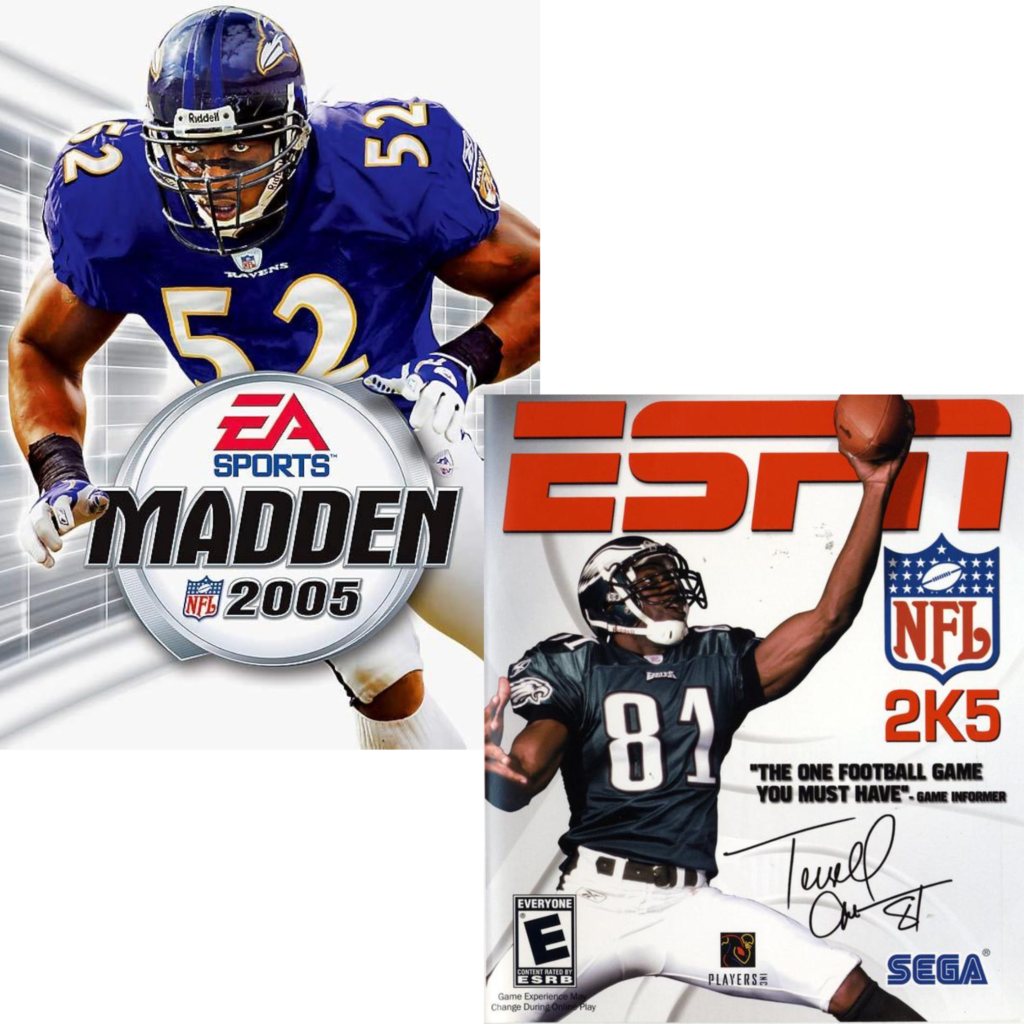
The 2004 Price War: Madden NFL 2005 vs. ESPN NFL 2K5
In the summer of 2004, publisher Sega and developer Visual Concepts launched a direct challenge to EA’s market share by releasing ESPN NFL 2K5 at a highly disruptive retail price point of $19.99. Featuring broadcast-quality presentation, advanced physical collision logic, and detailed game modes, Sega’s offering posed an immediate threat to EA’s flagship franchise, Madden NFL, which carried a traditional $49.99 price tag.
Recognizing both the qualitative and commercial threat, Electronic Arts responded with defensive pricing measures, dropping Madden NFL 2005 to $29.95 to safeguard its installed base. This high-stakes commercial clash exposed the vulnerability of annual release cycles that relied on brand inertia rather than technological leaps.
| Metric / Feature | Madden NFL 2005 / ESPN NFL 2K5 Strategic Contrast |
|---|---|
| Launch Retail Pricing | ESPN NFL 2K5 launched at a disruptive $19.99; Madden NFL 2005 launched at $49.99 before an emergency defensive price reduction to $29.95. |
| Market Strategy | Sega executed high-value price disruption; EA utilized defensive price protection to retain its core market share. |
| Presentation Architecture | ESPN NFL 2K5 featured full ESPN television broadcast presentation; Madden relied on traditional arcade-style overlays. |
| Competitive Impact | Forced EA to abandoned total reliance on brand momentum, exposing engine vulnerabilities to head-to-head competition. |
The Exclusive License Lockdown
Determined to permanently eliminate the risk of price wars and head-to-head software evaluations, Electronic Arts moved swiftly from defensive pricing tactics to strategic market foreclosure. Late in 2004 and extending into 2005, EA negotiated sweeping, multi-year exclusive simulation licensing agreements with key sports governing bodies and media outlets, including the National Football League (NFL), the NFL Players Association (NFLPA), ESPN, and the Collegiate Licensing Company (CLC)/NCAA.
By locking down exclusive access to essential licenses—a monopoly renewed through multi-year extensions, including subsequent 10-year exclusive agreements with the NFL—EA guaranteed that no rival developer could launch a commercial NFL or college simulation. Removing free-market competition eliminated the financial necessity for annual architectural research and development (R&D). Without a competing studio driving technical parity, EA no longer faced market pressure to overhaul legacy software frameworks or risk capital on foundational gameplay mechanics.
Legal Fallout: Pecover v. Electronic Arts
EA’s aggressive consolidation of sports licenses eventually triggered federal antitrust litigation. Consumer class-action advocates filed Pecover v. Electronic Arts, alleging that EA leveraged anti-competitive licensing agreements to suppress free-market competition and artificially elevate retail software prices.
The legal resolution required EA to pay a $27 million settlement payout to class members. Additionally, the settlement placed a five-year moratorium on EA’s ability to maintain exclusive licensing agreements with the NCAA and the Arena Football League (AFL).
However, the legal resolution contained a critical structural asymmetry: the court left EA’s core $1.5 billion exclusive agreement with the NFL entirely untouched. This structural carve-out explained why the five-year NCAA moratorium failed to spur market competition. Without the high-volume, guaranteed sales backbone of an official NFL license, no third-party publisher—such as 2K or Sega—could justify investing tens of millions of dollars to build a brand-new, modern sports engine solely to service a college football title. Because EA’s primary NFL revenue engine remained legally insulated, consumer choice remained permanently constrained.
The transition of sports gaming from an R&D-driven technical arms race to a legally protected monopoly set a lasting precedent for the industry. By prioritizing license exclusion over software performance, Electronic Arts secured steady profitability at the expense of organic engine development. With legal barriers insulating the franchise from outside competition, the primary roadblock to simulation realism shifted from market competition to internal technical debt—setting the stage for chronic software performance issues.
Are you team Madden or do you miss the NFL 2K series? Let us know on your News Feed!!!





Responses